Leave Your Message
0%

When it comes to preserving food, you really can't overlook the importance of Acid Additives. These guys do more than just give your food a tasty boost—they also help it stay fresh longer by stopping harmful microbes in their tracks. With everyone talking more and more about food safety—whether you're a pro in the food biz or just someone who loves cooking at home—getting to know the different kinds of Acid Additives out there is pretty key to keeping your food safe and tasty.

From citric to acetic acid, there's a whole bunch of options, and each one has its own special uses across all sorts of foods. Using these acids isn't just about maintaining that just-picked freshness; they also serve as a natural alternative to artificial preservatives, which is a huge plus given the trend toward cleaner, simpler ingredient lists.

In the next couple of sections, we’re gonna take a closer look at the top 10 Acid Additives that could totally up your food preservation game. Whether you're running a commercial kitchen or just keeping things fresh at home, knowing how to use these properly can make a real difference in keeping your food safe and delicious for longer—because, let’s face it, who doesn’t want that?

So, stick around, and I’ll walk you through everything you need to know to make smarter choices when it comes to storing and safeguarding your tasty creations.
Top 10 Acid Additives You Need for Effective Food Preservation Techniques

Understanding Acid Additives in Food Preservation

Top 10 Acid Additives You Need for Effective Food Preservation Techniques

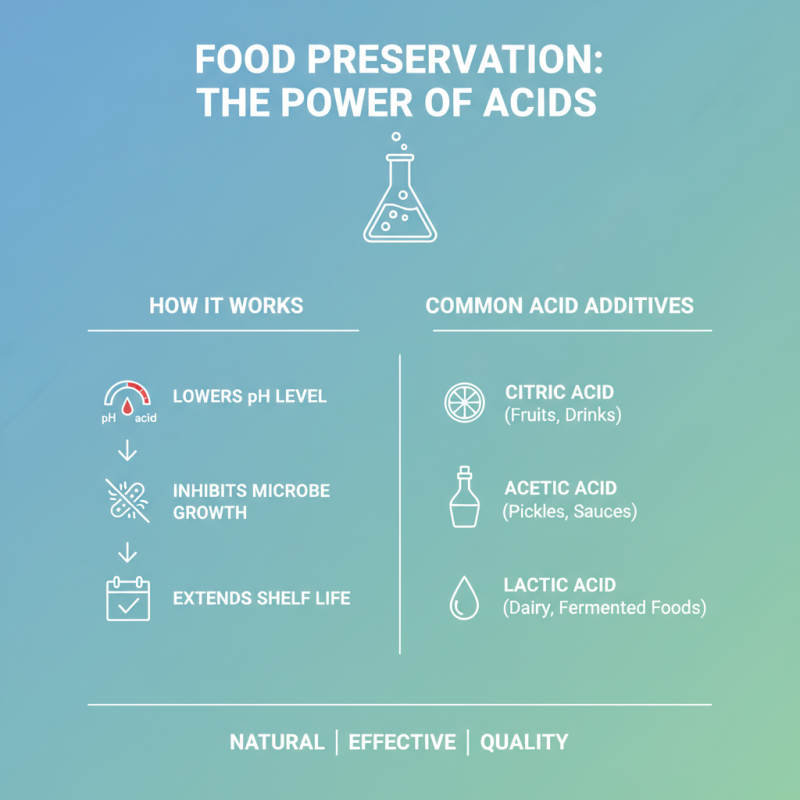
Acid additives play a crucial role in food preservation, enhancing flavor while inhibiting the growth of harmful microorganisms. These substances lower the pH of food products, thereby creating an environment that is less conducive to spoilage. Common acid additives include citric acid, acetic acid, and lactic acid, each contributing unique benefits in various culinary applications. Understanding the science behind these additives allows food producers to extend shelf life and maintain quality without relying on artificial preservatives.

When using acid additives, consider the balance of flavors in your recipes. For example, adding a small amount of citric acid can brighten the taste of canned fruits without overpowering their natural sweetness. Additionally, be mindful of the concentration used—too much acidity can alter taste profiles negatively and affect the texture of the food. A tip for home canning enthusiasts is to always follow tested recipes that specify the correct type and amount of acid to maintain safety and product quality.

Another helpful tip is to experiment with different acid additives for unique flavor profiles. For instance, using apple cider vinegar not only enhances the preservation of pickles but also adds a distinct fruity note. Moreover, understanding the specific roles each acid plays can better inform your approach to food preservation, allowing you to create both safe and delicious preserved items.

Types of Acid Additives Commonly Used in Food Industry

Acid additives play a crucial role in the food industry, primarily for their ability to preserve food by inhibiting the growth of harmful microorganisms and enhancing flavor. Among the commonly used acid additives, citric acid stands out for its effectiveness and versatility. It is naturally found in citrus fruits and is often utilized in preserving fruits and juices, as well as in canned goods. Its low pH creates an environment unfavorable for bacterial growth, making it an ideal choice for extending shelf life.

Another prominent acid additive is acetic acid, commonly found in vinegar. It is widely employed in pickling processes and is valued not only for its preservative qualities but also for imparting a tangy flavor to various dishes.

Lactic acid, produced during fermentation, is another significant additive that helps in preserving dairy products and fermented foods. Its ability to inhibit spoilage organisms while enhancing the acidity of food products makes it a favored choice among food manufacturers. These acid additives collectively contribute to the safety, quality, and longevity of a wide array of food items in today's market.

Mechanisms of Action: How Acids Preserve Food

Top 10 Acid Additives You Need for Effective Food Preservation Techniques

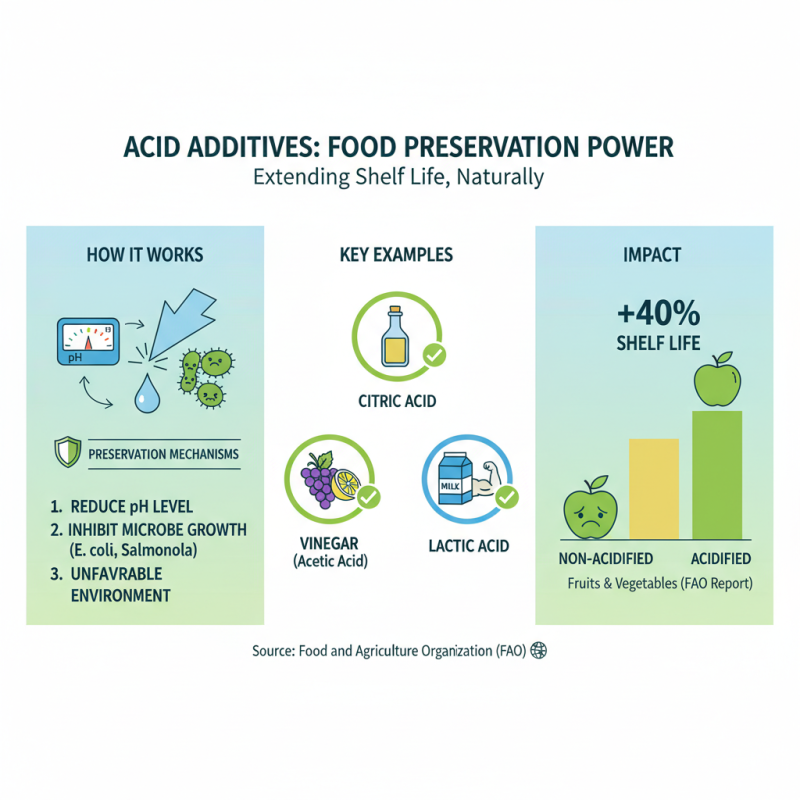
Acid additives play a crucial role in food preservation by disrupting the growth of spoilage microorganisms and enhancing the shelf life of various products. Their preservation mechanisms primarily rely on reducing the pH level of food, which creates an unfavorable environment for bacteria and molds. For instance, vinegar, citric acid, and lactic acid have been shown to effectively lower pH levels, inhibiting the growth of pathogens such as E. coli and Salmonella. According to a report from the Food and Agriculture Organization (FAO), the application of acidification techniques can extend the preservation of fruits and vegetables by 40% or more compared to non-acidified products.

Moreover, acids can contribute to food preservation through additional mechanisms, such as chelation of metal ions that are essential for microbial growth and by denaturing proteins in spoilage organisms. A comprehensive analysis by the Institute of Food Technologists indicates that foods treated with acid additives not only exhibit prolonged shelf life but also maintain their nutritional quality and flavor profile. This makes acidification not just an effective strategy for food safety, but also a preferred choice for enhancing the overall quality of food products.

**Tip:** When using acid additives, consider the balance between acidity and flavor; while preserving food, ensure that the final taste profile remains appealing to consumers. Additionally, it’s essential to use the right amount of acid to avoid negatively impacting the texture and taste of the food. For optimal results, refer to pH guidelines specific to the food type being preserved.

Benefits of Acid Additives for Flavor and Shelf Life

Acid additives play a crucial role in enhancing both the flavor and shelf life of food products. By reducing pH levels, these additives create an environment that inhibits the growth of spoilage microorganisms, which is essential for extending shelf life. Studies indicate that the inclusion of acid additives can reduce food waste significantly; for example, a report from the Food Waste Reduction Alliance outlines that using acidic preservatives can lead to a 25% decrease in spoilage for perishable items like vegetables and fruits. This not only benefits food manufacturers by reducing losses but also consumers who can enjoy fresher products for a longer time.

In addition to their preservative abilities, acid additives contribute to flavor enhancement, offering a tangy profile that elevates the overall taste experience. The balance of acidity is vital in food processing as it helps in stimulating appetite and adding depth to various dishes. In recent data revealed by the Institute of Food Technologists, incorporating acid additives has been correlated with higher consumer satisfaction, leading to an increase in repeat purchases by as much as 15% for acidic products.

Tips: When selecting acid additives, consider the specific type of food and the desired flavor impact. For example, citric acid is excellent for enhancing the freshness of fruits, while vinegar works well in savory preserves. Testing different concentrations is key to finding the perfect balance that preserves freshness while also enhancing flavor without overpowering the dish.

Best Practices for Using Acid Additives in Food Preparation

When it comes to food preservation, acid additives play a pivotal role in enhancing shelf life and ensuring food safety. Utilizing acids such as citric acid, acetic acid, and lactic acid can help lower the pH level of food products, inhibiting the growth of spoilage microorganisms and pathogens. According to a report by the Food Safety and Inspection Service, maintaining a pH of less than 4.6 significantly reduces the risk of bacteria like Clostridium botulinum in home-canned foods. This is crucial for home cooks and food processors striving to ensure their products remain safe for consumption.

Best practices for using acid additives involve understanding the specific acid's properties and its effects on food matrices. For example, adding citric acid to fruits not only lowers pH but also enhances their flavor profile, making them more palatable while extending shelf life. It's vital to measure acidity levels accurately, as excessive acidity can alter the intended taste and texture of food products. Industry guidelines recommend conducting pH checks regularly during the preservation process and making adjustments to formulations based on seasonal variations in ingredient quality. By adhering to these practices, food producers can optimize the benefits of acid additives, ensuring a balance between safety and sensory appeal in food products.

Safety Considerations When Using Acid Additives

When utilizing acid additives for food preservation, safety considerations are paramount. First and foremost, it's essential to understand the proper pH levels that inhibit microbial growth while ensuring food safety. For example, maintaining the pH below 4.6 can effectively prevent the growth of harmful bacteria. Therefore, it is crucial to measure the acidity of your food products accurately, as insufficient acidification can lead to spoilage or foodborne illnesses.

Additionally, users must be aware of the quality and source of the acid additives employed in preservation techniques. Using food-grade acids is important, as industrial-grade products may contain impurities or contaminants unsuitable for consumption. Moreover, proper handling and storage of these acids are essential to prevent cross-contamination or degradation. Personal protective equipment, such as gloves and goggles, should be used when working with concentrated acid solutions to avoid injuries or skin irritations. By prioritizing safety in every step of the process, one can effectively leverage the benefits of acid additives for food preservation without compromising health.

Future Trends in Acid Additives for Food Preservation Techniques

As the food industry continues to evolve, the role of acid additives in food preservation is becoming increasingly significant. Innovations in this area promise to enhance shelf life while maintaining the safety and quality of food products. One of the emerging trends is the use of natural acidifiers derived from plants and fermentation processes. These alternatives not only appeal to health-conscious consumers but also provide unique flavors that traditional preservatives lack. For example, the use of citric acid from fruits or lactic acid from fermented foods offers a dual benefit of prolonging preservation and enhancing taste.

Another trend shaping the future of acid additives in food preservation is the emphasis on sustainability. As environmental concerns rise, the food industry is looking for ways to reduce its carbon footprint. This has led to the development of acid additives that minimize waste and utilize by-products from agriculture. Additionally, research into organic acids has shown potential for improving the efficacy of preservation methods, allowing for lower concentrations to achieve desired effects. This focus not only aligns with consumer preferences for cleaner labels but is also paving the way for natural preservatives that meet both regulatory standards and market demands.

FAQS

: What are acid additives, and why are they important in the food industry?

: Acid additives are compounds used to preserve food by inhibiting the growth of harmful microorganisms and enhancing flavor. They play a crucial role in extending the shelf life and ensuring the safety and quality of various food items.

How do acid additives preserve food?

Acid additives preserve food primarily by lowering the pH level, creating an environment that is unfavorable for bacteria and molds. This process inhibits the growth of pathogens and helps to extend the shelf life of food products.

Can you name some common acid additives used in food preservation?

Common acid additives include citric acid, acetic acid (found in vinegar), and lactic acid. These additives serve various purposes in preserving fruits, vegetables, dairy products, and other foods.

What additional benefits do acid additives provide beyond preservation?

Beyond preservation, acid additives enhance the flavor of food, providing a tangy profile that can improve taste experiences. They also help to stimulate appetite and contribute to consumer satisfaction.

How can the use of acid additives affect food waste?

The inclusion of acid additives can significantly reduce food waste. Studies suggest that they can lead to a 25% decrease in spoilage for perishables like fruits and vegetables, benefiting both food manufacturers and consumers.

What guidelines should be followed when using acid additives?

It is essential to consider the balance between acidity and flavor when using acid additives. Using the appropriate amount of acid is crucial to avoid negatively impacting the texture and taste of the food, and one should refer to specific pH guidelines for the food type being preserved.

How do acid additives influence consumer behavior?

Incorporating acid additives in food products has been linked to higher consumer satisfaction, leading to increased repeat purchases. Products with balanced acidity are more appealing to consumers, contributing to continued sales.

What is the role of pH in the effectiveness of acid additives?

The pH level is critical because lower pH levels, achieved through acid additives, inhibit the growth of spoilage microorganisms. Effective acidification can enhance the overall quality and longevity of food items.

How do acid additives interact with spoilage microorganisms?

Acid additives not only reduce pH levels but also affect spoilage microorganisms by chelating essential metal ions for microbial growth and denaturing proteins in these organisms, further enhancing their preservative effect.

What should be considered when selecting acid additives for specific foods?

When selecting acid additives, it’s important to consider the specific type of food and the desired flavor impact. Testing different concentrations is crucial for achieving the right balance between preservation, flavor enhancement, and overall dish appeal.

Conclusion

Acid additives are essential components in food preservation, playing a critical role in extending shelf life and enhancing flavor. Understanding the various types of acid additives commonly used in the food industry is crucial for effective preservation techniques. These acids work by creating an environment that inhibits microbial growth and enzymatic activity, thereby maintaining the quality of food products over time.

Incorporating acid additives not only benefits preservation but also contributes to the overall sensory experience of food, improving its taste. However, it is important to follow best practices when using these additives to ensure safety and effectiveness. As the food industry evolves, future trends may introduce innovative acid additives that further enhance preservation techniques, ensuring both safety and quality in food preparation.

Liam

Liam

Liam is a dedicated marketing professional at Sichuan Youzhu New Materials Technology Co., Ltd., where he leverages his extensive knowledge of the company’s innovative products to elevate brand visibility and engagement. With a strong background in materials science, Liam is deeply involved in......
Previous Essential Insights for Global Buyers on Demulsifier Oil and Gas Solutions