In the world of oilfield operations—it's pretty complicated, to say the least—picking the right Oilfield Surfactants can make a huge difference. I mean, John Miller, who's pretty much a big deal in chemical engineering, once said, “The success of any oil extraction really depends on the quality of surfactants you use.” That just shows how key surfactants are when it comes to pulling more oil out of the ground.
Basically, these surfactants are super important because they help reduce the surface tension between oil and water. They help emulsify and disperse water in oil—that's a fancy way of saying they make the whole process way more efficient. Choosing the right surfactant can seriously boost your production rates, but you gotta think about a few things like how well it works, how much it costs, and what kind of environmental footprint it leaves.
That said, it's not always smooth sailing. Not every surfactant will work perfectly under different conditions. Sometimes, people get confused about product specs or overestimate what a surfactant can do, which can end up causing delays or inefficiencies. That's why it's so important to work closely with engineers and chemists who really know their stuff about oilfield surfactants. Making smart, informed choices here can totally streamline operations and save you a lot of trouble down the line.

Understanding the Role of Surfactants in Oilfield Operations
Surfactants play a crucial role in oilfield operations, impacting extraction efficiency and production costs. Their ability to reduce surface tension improves oil recovery rates. A study by the Society of Petroleum Engineers revealed that using the right surfactants can boost oil recovery by up to 30%. This showcases their significance in enhancing overall productivity.
Effective selection of Oil & Gas Surfactants hinges on understanding their specific functions. They assist in emulsifying water and oil, facilitating the removal of impurities. Different surfactants work better in varied conditions. Yet, many operators overlook this, leading to suboptimal choices. Such decisions can hinder performance and escalate expenses.
Furthermore, it is essential to consider local environmental regulations when choosing surfactants. Some surfactants may not be suitable for certain ecosystems. Awareness of their environmental impact is vital. Balancing efficiency with sustainability often poses a challenge. Operators must reflect on their choices and the long-term effects on both production and the environment.
Types of Surfactants Commonly Used in Oil Extraction
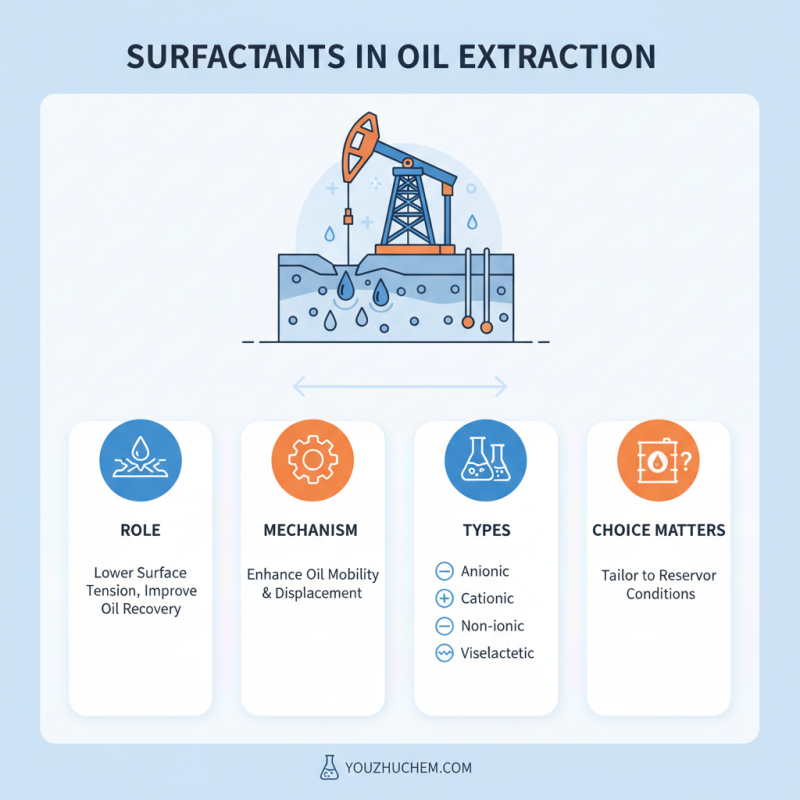
In oil extraction, choosing the right surfactant plays a crucial role. Surfactants lower surface tension, improving the efficiency of oil recovery. Common surfactants include anionic, cationic, non-ionic, and Viscoelastic Surfactants. Each type has unique properties affecting their application.
Anionic surfactants, widely used for oil displacement, offer excellent stability in alkaline environments. They can adapt in varying conditions, making them versatile. Cationic surfactants, on the other hand, are effective in promoting wettability changes but can suffer from stability issues. It’s essential to evaluate the formation water chemistry when selecting these surfactants.
Viscoelastic surfactants are gaining popularity due to their ability to enhance oil mobility. Reports indicate that their use can improve recovery rates by up to 20%. However, understanding the interaction between surfactants and reservoir conditions remains a challenge.
Tip: Always conduct small-scale tests to evaluate surfactant performance before large-scale application.
While choosing the best surfactant, consider environmental effects. Some surfactants may lead to negative ecological impacts.
Tip: Research local regulations to ensure compliance with environmental standards. This can prevent unforeseen issues later. Keep in mind that no surfactant is a one-size-fits-all solution; adjustments may be necessary as conditions change.
Factors Influencing the Selection of Oilfield Surfactants
Selecting the right oilfield surfactants is crucial for efficient operations. Several factors influence this choice. Understanding the specific formation characteristics is essential. For example, reservoir temperature and salinity significantly impact surfactant performance. High salinity can reduce surfactant effectiveness, making it vital to consider the local water chemistry.
Performance data shows that optimized surfactant formulations can enhance oil recovery by up to 30%. In hydraulic fracturing, surfactants help reduce surface tension, improving fluid efficiency. Their role in creating favorable conditions for fluid displacement cannot be overstated. Operators should conduct thorough assessments of rock permeability and fluid interactions.
Tip: Always run pilot tests before full-scale implementation. Testing surfactants on a small scale helps identify the most effective options for your specific conditions.
Another crucial factor is the environmental impact of surfactants. Many formulations can be harmful to aquatic life. It's important to choose biodegradable options whenever possible. Striking a balance between efficiency and environmental safety is a continuous challenge.
Tip: Regularly review the latest industry reports. Staying updated on new formulations and technologies will help in making informed choices. The landscape is always evolving, and adapting to these changes is key for optimized operational efficiency.
Evaluating the Performance of Surfactants in Field Conditions
When evaluating the performance of surfactants in oilfield conditions, it's essential to consider several factors. Temperature fluctuations can significantly impact surfactant effectiveness. A surfactant that performs well at room temperature may fail in extreme heat or cold. Field tests should mimic real-life conditions as closely as possible.
Additionally, the presence of contaminants can alter surfactant behavior. For example, high levels of salt or other impurities may reduce efficacy. Testing in a controlled environment often doesn't reveal these challenges. Therefore, accurate field testing is crucial. Small-scale trials can identify these issues early, allowing for adjustments before full-scale implementation.
Assessing the performance of surfactants also involves looking at their stability over time. Even effective surfactants can degrade quickly in harsh conditions. Regular monitoring and evaluation are necessary to ensure long-term operational efficiency. Balancing cost and performance remains a persistent challenge. Sometimes, the cheapest option may not yield the best results in the field. Testing is vital to confirm that choices meet actual operational needs.
Compatibility of Surfactants with Other Chemicals in Oilfields
In oilfields, surfactants play a critical role in enhancing efficiency. However, their compatibility with other chemicals is crucial. A report from a leading industry research group highlights that about 30% of surfactants in field operations do not mix well with acids or electrolytes. This can lead to reduced performance and unexpected results.
The interaction between surfactants and other chemicals can vary significantly. For example, certain surfactants may form precipitates with divalent ions, limiting their effectiveness. Stability studies show that mixing specific surfactants with corrosive agents can accelerate degradation. These factors are vital when selecting surfactants for specific applications.
It is essential to conduct thorough compatibility testing before deploying surfactants in the field. Some chemical combinations may appear harmless but lead to significant operational challenges. Unexpected surfactant behavior can cause inefficiencies, increased costs, and project delays. Regular evaluation and adjustment based on field data can help avoid these pitfalls.
Cost Considerations When Choosing Oilfield Surfactants
Choosing the right oilfield surfactants involves considerable cost considerations. Many companies overlook the impact of surfactant choice on overall operational costs. A report from the Society of Petroleum Engineers highlights that ineffective surfactants can lead to higher water recovery costs, which can reach up to $2.50 per barrel. In contrast, an optimal surfactant can reduce these costs significantly.
Cost-effective surfactant solutions should focus on efficiency. An analysis shows that surfactants with low critical micelle concentration (CMC) tend to perform better, as they require less quantity for effective results. This can lead to savings in both procurement and waste disposal operations. However, it is crucial to evaluate long-term performance rather than just initial costs.
**Tip:** Examine the performance data of various surfactants in similar formations. Use pilot tests to determine their effectiveness and hidden costs.
In regular operations, some producers might prioritize cheaper formulations. This often leads to performance issues, where more surfactant is needed over time. Overspending can occur, negating initial savings. Monitoring and adjusting surfactant usage can help identify cost overruns and improve decision-making in the selection process. Always remember that the cheapest choice can sometimes end up being the most expensive.
**Tip:** Keep track of all costs associated with surfactant use. Evaluate these figures quarterly to inform future purchasing decisions.
Regulatory and Environmental Factors in Surfactant Selection
Environmental considerations are becoming crucial in the oilfield surfactant selection process. Regulatory bodies often impose restrictions on the types of chemicals that can be used. Choosing a surfactant that complies with these regulations is not just a legal necessity, but also essential for sustainable operations. Many oilfield operators overlook the potential environmental impact of their surfactant choices. This can lead to costly remediation efforts later.
**Tip:** Always review local regulations regarding surfactants before making a choice. Stay informed about any changes.
Moreover, the toxicity level of potential surfactants is a serious concern. Many surfactants can disrupt local ecosystems if not carefully managed. Choosing biodegradable options may seem more expensive initially, but it can prevent environmental fines. Operators should prioritize materials that minimize ecological risk.
**Tip:** Experiment with Flowback Surfactants that are both effective and environmentally friendly. Performance shouldn't come at the expense of safety.
Assessing the long-term implications of surfactant use is essential for responsible operations. Analyzing lifecycle impacts can reveal surprising insights. Some surfactants degrade more slowly than expected, causing lingering contamination. Regular evaluations and adjustments are critical. Commit to improving choices for better environmental performance.
How to Choose the Best Oilfield Surfactants for Efficient Operation? - Regulatory and Environmental Factors in Surfactant Selection
| Surfactant Type |
Environmental Impact |
Regulatory Compliance |
Cost ($ per gallon) |
Efficiency Rating (1-10) |
| Anionic Surfactants |
Moderate |
EPA Compliant |
1.20 |
8 |
| Cationic Surfactants |
High |
Limited Use |
1.50 |
7 |
| Nonionic Surfactants |
Low |
Fully Compliant |
1.10 |
9 |
| Zwitterionic Surfactants |
Moderate |
EPA Compliant |
1.30 |
8 |
| Green Surfactants |
Very Low |
Fully Compliant |
1.00 |
10 |
FAQS
: Key factors include formation characteristics, temperature, salinity, and local water chemistry.
High salinity can reduce the effectiveness of surfactants, requiring careful consideration of local conditions.
Pilot tests help identify the most effective surfactants for specific conditions and prevent costly mistakes.
Some surfactants can harm aquatic life, so choosing biodegradable options is important for environmental safety.
Temperature fluctuations can impact performance; a surfactant may work at room temperature but fail in extreme conditions.
Field tests mimic real-life conditions, helping to identify issues that controlled environments may overlook.
Stability in harsh conditions is crucial; regular evaluations ensure long-term operational efficiency.
High levels of contaminants can alter surfactant performance, potentially decreasing efficacy in the field.
Not necessarily; sometimes, the cheapest surfactants don't provide the best results in actual field conditions.
Balancing cost and performance while meeting specific operational needs is a continuous challenge.
Conclusion
Oilfield surfactants play a crucial role in enhancing oil extraction efficiency by reducing surface tension and improving wettability. Various types of surfactants are employed in oilfield operations, each tailored to specific extraction needs. When selecting the appropriate oilfield surfactants, several factors come into play, including their compatibility with other chemicals used, performance under field conditions, and overall cost-effectiveness. Additionally, it is vital to consider regulatory and environmental implications to ensure sustainable practices in oil extraction.
The evaluation of surfactants' performance in real-world conditions is essential for identifying the most effective solutions. By understanding the unique properties of different surfactants and their interaction with reservoir fluids, oilfield operators can optimize their processes. Ultimately, the careful selection of oilfield surfactants can lead to improved operational efficiency while adhering to environmental guidelines.